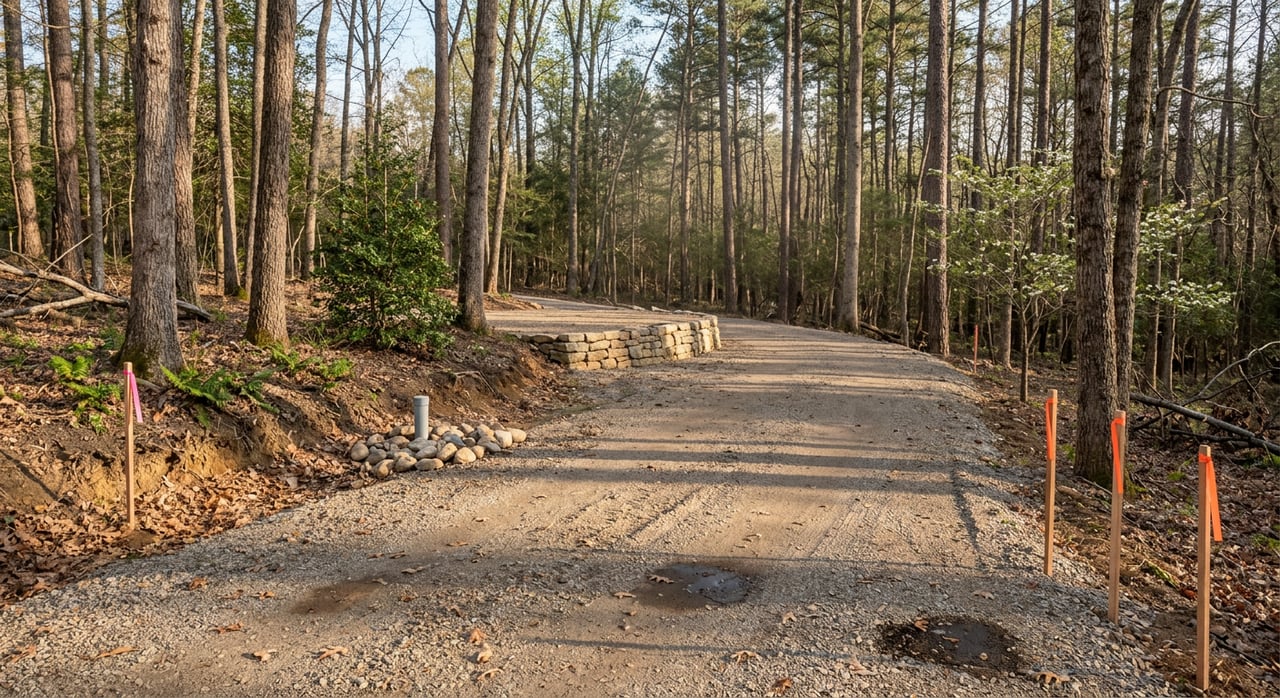
Dreaming of a ridge-view lot on Sand Mountain where you can build your own place? Buying land around Pisgah can be rewarding, but the terrain, utilities, and permits work a little differently than in town neighborhoods. With a clear plan, you can avoid surprises and buy with confidence. In this guide, you’ll learn what to check for utilities, soils, access, and permits, plus a step-by-step checklist and local links to help you move forward. Let’s dive in.
Why Pisgah land is different
Setting and terrain
Pisgah sits on the western edge of Sand Mountain, a plateau above the Tennessee Valley with shallow soils over sandstone and long views across wooded ridges. These conditions are beautiful and practical at the same time. You’ll find scenic bluff lots, rolling pasture, and timbered tracts, but the rock and relief can affect wells, septic systems, driveway grades, and foundation choices. Learn more about the town’s setting in the Encyclopedia of Alabama overview of Pisgah, and see the plateau context in the Sand Mountain entry.
Common parcel types you’ll see
Across Jackson County, you’ll often see one-acre building lots, 5 to 20 acre mini-homesteads, and larger recreational or timber tracts. Each type can work well for a custom home or small farm. Prices vary by access, water availability, septic feasibility, and whether a parcel already has improvements like a driveway or cleared homesite. The key is to test buildability early so you do not buy a view that is hard to service.
Utilities to verify before you buy
Water service
If the lot is inside or near town, ask the Town of Pisgah for a written statement on water availability, meter size, and one-time connection fees. The town publishes rules for applications, meter installation, and customer responsibilities in its Water Ordinance. You can also review the current fee structure in the town’s Water Rates schedule. If public water is not at the road, request an extension estimate from the utility and price a private well as a backup.
Septic and site tests
Most rural parcels here depend on septic. Alabama’s onsite sewage permitting runs through the state health department, and a perc or site evaluation is typically required before you can install a system. On Sand Mountain, shallow soils over bedrock can limit conventional systems, so treat the site evaluation as a must-have contingency. Review permit forms and steps through the Alabama Department of Public Health’s onsite sewage page and confirm results in writing before you close.
Power and line extensions
Local electric service in much of Sand Mountain is provided by Sand Mountain Electric Cooperative (SMEC). New construction often needs a line extension, which can include poles, transformers, and underground runs beyond an initial allowance. Costs vary by distance and terrain, so always get a written estimate early. SMEC outlines typical rules and cost drivers in its Line Extension Summary.
Broadband and cell coverage
Internet options change block by block. Areas closer to towns may have cable or fiber, while more rural addresses might rely on fixed wireless, satellite, or carrier 5G home internet. If you work from home or upload large files, check address-level availability with providers and review the FCC broadband map for nearby market coverage. Confirm any planned buildouts and installation timelines in writing.
Call before you dig
Alabama law requires you to contact 811 before any excavation so utilities can mark lines. Remember that private service lines beyond the meter are not always marked. See the safety reminder on Call Before You Dig.
Site and permitting factors that add cost
Survey, title, and easements
Order a current boundary survey from a licensed surveyor and review it for legal access, recorded easements, and encroachments. Ask the seller for the deed, any covenants, and past surveys, then verify records through Jackson County’s offices. You can find county contact details through the state’s listing of property tax and records offices.
Access and road work
Confirm whether access is by a public county road or a private easement. If it is private, you need a written, recorded agreement on maintenance. For new driveways on county roads, you may need a driveway or culvert permit. Your agent can help you contact the county road department and document any requirements.
Well feasibility
If public water is not available, consult a local well driller for expected drilling depths and yields in your micro-area. On Sand Mountain, it is common to hit shallow sandstone bedrock, and depth and production can vary over short distances. These ground conditions, noted in the Sand Mountain overview, may raise drilling difficulty and cost in some spots.
Floodplain and wetlands
Even on a plateau, lots near creeks or gorge rims can intersect mapped flood zones or wetlands. Check the property’s flood status using FEMA’s Map Service Center. If any portion lies in a regulated zone, factor in permits, potential building restrictions, and flood insurance.
Zoning and permits
Unincorporated parts of Jackson County are often described as having limited or no county-wide zoning. That said, you should always confirm the exact rules that apply to your parcel with county staff and review municipal ordinances if you are inside Pisgah town limits. Start with the county contacts listed on the state’s property records page, and ask your agent to help document answers in writing.
A practical due diligence checklist
Use this sequence to keep your land purchase on track:
- Hire a local buyer’s agent experienced in Jackson County land. Ask for recent comparable sales and a parcel-level review using the tax ID and recorded documents.
- Request from the seller: the current deed, any covenants or restrictions, copies of prior surveys, and any utility account info.
- Order a current boundary survey showing rights-of-way, utility easements, and encroachments. Consider adding topographic shots if the site is steep.
- Get written utility availability statements. For water, contact the Town of Pisgah and review the Water Ordinance and rate schedule. For power, request a line-extension estimate from SMEC using its Line Extension Summary as a guide. For internet, verify address-level service and timing, using the FCC broadband map reference as a starting point.
- Order a septic site evaluation or perc test with an ADPH-approved professional, and make your purchase contingent on a satisfactory result. Review forms and permit steps on the ADPH onsite sewage page.
- If water lines are not at the road, get a well driller’s written estimate for typical depth and cost on your parcel.
- Open title and request a commitment. Confirm the chain of title, liens, mineral reservations, and any recorded easements or restrictions.
- Meet a local builder or civil engineer on-site. Discuss driveway alignment, culverts, grading, and foundation types that suit shallow soils or rock.
- Pull property tax history and recorded instruments through Jackson County. Use the state’s county office directory to confirm where to request records.
- Get firm written estimates and timelines for the big items: water meter/connection, electric line extension, septic system, well drilling, driveway and culvert, and any permit fees.
Budget items to plan and price
Build a realistic budget by getting written estimates for:
- Water meter and connection fees, or well drilling if needed
- Septic system design, permit, and installation
- Electric line extension, poles or underground service, and transformer
- Internet installation or equipment for fixed wireless or satellite
- Driveway, culvert, and site grading on steeper parcels
- Foundation type suited to shallow soils or rock
- Boundary survey and title work
- Permit or application fees as required
Work with a local guide you trust
Buying land around Pisgah is about more than a pretty view. You want clear answers on water, septic, power, and access before you commit. A local, hands-on agent can coordinate surveys, utility letters, perc tests, and estimates so you move forward with confidence. If you are weighing multiple tracts, a guided comparison can save you both time and money.
When you are ready to explore land on Sand Mountain, reach out to Angela Wilson. You will get warm, responsive service backed by deep North Alabama knowledge and practical, step-by-step support from first look to closing.
FAQs
Can you build a home on unincorporated land in Jackson County?
- Usually yes, if the lot has a satisfactory septic site evaluation or access to municipal systems; confirm permit steps with the county and review ADPH onsite forms.
How do you confirm water and power for a Pisgah parcel?
- Request a written water availability letter from the town and review the Water Ordinance, then get a SMEC line-extension estimate using its Line Extension Summary.
What if the property is steep or rocky on Sand Mountain?
- Expect higher costs for grading, foundations, and possibly septic; plan a site visit with a builder and confirm soils per the Sand Mountain overview.
Do you need to check flood maps for a ridge or bluff lot?
- Yes; pockets near creeks or gorge rims can be mapped, so verify status on FEMA’s Map Service Center and include flood contingencies.
Who do you contact before trenching a driveway or setting a pole?
- Call 811 to request utility locates; see the safety guidance on Call Before You Dig.
Where do you verify deeds, taxes, and recorded easements?
- Start with Jackson County’s offices listed on the state’s property records and appraisal directory, and have your title company pull a full commitment.